
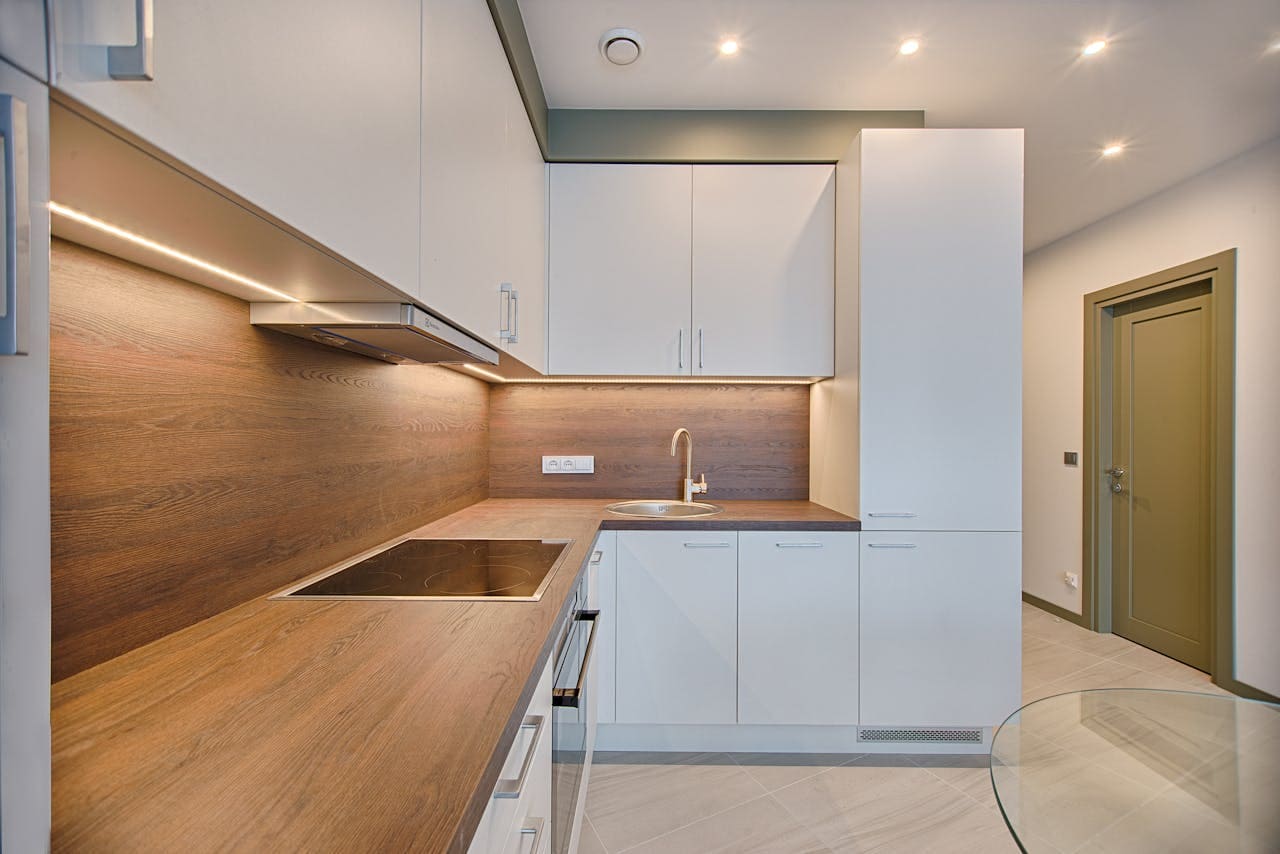
IKEA kitchen cabinets dominate renovation discussions, yet contradictory opinions leave homeowners questioning whether Swedish engineering truly delivers lasting value.
IKEA kitchen cabinets offer exceptional value for budget-conscious renovations, featuring solid construction, modern hardware, and extensive customization options. While they utilize particleboard construction rather than solid wood, their 25-year warranty, soft-close hinges, and modular design system provide reliability and functionality that rivals premium brands at fraction of the cost.
Build Quality
The construction methodology behind IKEA’s SEKTION cabinet system reveals sophisticated engineering that maximizes material efficiency while maintaining structural integrity. Their particleboard cores undergo rigorous density testing to ensure consistent performance across varying humidity conditions and temperature fluctuations common in kitchen environments.
European manufacturing standards govern every aspect of production, from adhesive formulations to edge-banding processes that protect vulnerable core materials from moisture infiltration. These stringent protocols result in cabinets that consistently exceed industry benchmarks for dimensional stability and load-bearing capacity.
Meanwhile, the melamine surface treatments provide exceptional resistance to scratches, stains, and thermal damage that plague traditional wood finishes. This thermally-fused coating creates molecular bonds with underlying substrates, producing surfaces that withstand decades of kitchen abuse without requiring refinishing or special maintenance.
However, particleboard construction presents inherent limitations that distinguish IKEA cabinets from premium solid wood alternatives. Water damage can cause irreversible swelling, while heavy impacts may leave permanent dents that cannot be easily repaired through conventional refinishing techniques.
Nevertheless, independent testing by furniture industry laboratories consistently rates IKEA cabinet durability above average for their price category. Load-bearing tests demonstrate shelf capacities exceeding 50 pounds when properly installed, while hinge cycle testing confirms smooth operation through hundreds of thousands of opening cycles.
“IKEA cabinets have come a long way in build quality. Their current generation rivals cabinets costing twice as much from traditional manufacturers.” Kitchen designer Maria Rodriguez
Hardware Systems
The hardware ecosystem within IKEA’s cabinet lineup showcases remarkable attention to detail that elevates the user experience far beyond expectations for budget-oriented products. Soft-close hinges operate through sophisticated hydraulic damping mechanisms that provide consistent, whisper-quiet closure regardless of door weight or closing force.
These European-style hinges incorporate three-dimensional adjustment capabilities that accommodate slight installation irregularities while maintaining perfect door alignment throughout years of use. The adjustment screws enable precise fine-tuning of door positioning without requiring specialized tools or professional expertise.
Furthermore, the drawer slide systems utilize ball-bearing mechanisms rated for substantial weight loads and extended operational lifecycles. Full-extension slides provide complete drawer access, while integrated soft-close features prevent jarring impacts that could damage contents or compromise joint integrity over time.
Additionally, the cam-lock assembly system that connects cabinet components demonstrates brilliant engineering simplicity. These zinc-alloy connectors create rigid structural joints without requiring traditional wood glue, enabling easy disassembly for future modifications or relocations.
Handle and knob selections span contemporary and traditional aesthetics while maintaining consistent quality standards across all price points. The mounting hardware utilizes machine threads and reinforcement plates that distribute stress loads effectively, preventing the loosening issues common with budget cabinet systems.
The Blum Soft-Close Hinges used in IKEA cabinets represent the same premium hardware found in luxury kitchen installations, demonstrating their commitment to quality components.
“The hardware quality on IKEA cabinets consistently surprises contractors. Those soft-close hinges and drawer slides perform as well as components from high-end manufacturers.” Professional installer Tom Chen
Design Flexibility
IKEA’s modular approach to kitchen design unleashes creative possibilities that traditional cabinet manufacturers struggle to match within comparable budgetary constraints. The standardized component system enables mixing and matching of door styles, finishes, and interior accessories to create personalized solutions tailored to specific functional requirements.
Cabinet sizing follows metric increments that optimize space utilization while accommodating standard appliance dimensions. This systematic approach eliminates the custom sizing premiums associated with traditional cabinetry while providing flexibility to address unique spatial challenges.
Moreover, the extensive interior accessory catalog transforms basic cabinet boxes into highly organized storage solutions. Pull-out drawers, lazy Susans, spice racks, and specialized organizers maximize storage efficiency while maintaining easy accessibility to frequently used items.
Color and finish options continue expanding as IKEA responds to evolving design trends. From classic white melamine to bold navy blues and warm wood tones, the selection accommodates diverse aesthetic preferences without requiring custom manufacturing lead times.
Additionally, the ability to purchase individual components enables phased renovations or future modifications that adapt to changing needs. Door style updates, hardware refreshes, or interior reconfiguration can be accomplished without replacing entire cabinet systems.
Height variations within the system accommodate both standard and tall ceiling applications while maintaining proportional aesthetics. Wall cabinets, base units, and tall pantry configurations integrate seamlessly to create cohesive designs regardless of kitchen layout complexity.
| Cabinet Category | Standard Sizes | Customization Options |
|---|---|---|
| Base Cabinets | 12″-36″ widths | Interior accessories, door styles |
| Wall Cabinets | 12″-40″ widths | Height variations, glass doors |
| Tall Units | 15″-24″ depths | Pantry, appliance integration |
| Specialty Items | Corner, island | Unique storage solutions |
Value Proposition
The economic advantages of choosing IKEA kitchen cabinets extend beyond simple sticker price comparisons to encompass total ownership costs, including maintenance, repairability, and future upgrade potential. Initial investment typically runs 40-60% less than comparable quality traditional cabinets while providing similar functionality and aesthetic appeal.
Long-term value considerations favor IKEA’s modular system through component replaceability that extends overall system lifespan. Individual doors, drawers, or hardware pieces can be replaced or upgraded without requiring complete cabinet replacement, spreading costs over extended timeframes.
Furthermore, the widespread availability of IKEA products ensures consistent access to replacement parts and accessories years after initial installation. This accessibility contrasts sharply with boutique manufacturers who may discontinue product lines or cease operations entirely.
Installation cost savings represent another significant value component for DIY-capable homeowners. IKEA’s flat-pack design and comprehensive instructions enable self-installation that eliminates professional labor costs ranging from $3,000-$8,000 for typical kitchen projects.
However, professional installation remains advisable for complex layouts or homeowners lacking renovation experience. Even with professional installation costs, total project expenses typically remain substantially below traditional cabinet alternatives while delivering comparable functionality and aesthetics.
The IKEA SEKTION System exemplifies the modular approach that provides exceptional flexibility and value for modern kitchen renovations.
“When you factor in the total cost of ownership, IKEA cabinets provide unbeatable value. The ability to replace or upgrade individual components extends their useful life significantly.” Home renovation expert Lisa Park
Durability Testing
Rigorous testing protocols ensure IKEA kitchen cabinets withstand decades of typical household usage while maintaining structural integrity and operational smoothness. Accelerated aging tests subject materials to extreme temperature cycles, humidity variations, and UV exposure that simulate twenty years of kitchen conditions within compressed timeframes.
Door and drawer cycle testing pushes hardware components through millions of opening and closing operations to identify potential failure points before products reach consumer markets. These exhaustive evaluations inform design improvements and material selections that enhance long-term reliability.
Load-bearing assessments challenge shelves and cabinet structures with weights significantly exceeding normal kitchen storage requirements. Static and dynamic loading scenarios validate structural adequacy while identifying optimal loading configurations for maximum durability.
Moreover, impact resistance testing simulates accidental door slams, dropped objects, and other mechanical stresses that occur during normal kitchen use. Results inform hardware specifications and reinforcement strategies that prevent premature failures.
Chemical resistance evaluations expose cabinet surfaces to common household cleaners, cooking oils, and acidic substances that could cause staining or degradation. These tests guide surface treatment selections and cleaning recommendations provided to consumers.
The comprehensive testing regime positions IKEA cabinets favorably against industry standards while identifying specific care requirements that maximize product longevity. Understanding these limitations helps homeowners make informed decisions about appropriate applications and maintenance practices.
“IKEA’s testing standards exceed many premium manufacturers. Their durability data provides confidence in long-term performance when properly installed and maintained.” Furniture testing specialist David Wilson
Installation Process
The IKEA cabinet installation methodology balances DIY accessibility with professional-grade results through comprehensive instruction manuals, video tutorials, and customer support resources. The flat-pack design reduces shipping costs while enabling transportation in standard vehicles, though assembly requires patience and attention to detail.
Pre-installation planning becomes crucial for successful outcomes. Accurate measurements, electrical and plumbing coordination, and sequence planning prevent costly mistakes that could compromise final results. IKEA’s online planning tools assist with layout optimization and component selection.
Assembly procedures follow logical sequences that minimize handling of heavy components while ensuring proper joint alignment. The cam-lock system simplifies connections compared to traditional cabinet construction, yet requires precise hole alignment for optimal strength and appearance.
Additionally, wall mounting procedures demand careful attention to stud locations and level installation to ensure proper door alignment and long-term stability. The European mounting system provides strong attachment points when properly installed but requires specific techniques for optimal results.
Common installation challenges include corner cabinet alignment, countertop integration, and appliance coordination that may require professional expertise. Many homeowners successfully handle basic installations while engaging professionals for complex elements.
Here’s the typical installation sequence:
- Measure space and verify component compatibility
- Assemble cabinet boxes using cam-lock connectors
- Install wall mounting rails at proper height and level
- Mount cabinet boxes to wall rails with adjustment capability
- Install and adjust doors for proper alignment and operation
- Add interior accessories and final hardware components
Comparison Analysis
Evaluating IKEA cabinets against competing options reveals distinct advantages and limitations that influence purchase decisions based on individual priorities and project requirements. Premium manufacturers offer superior materials and construction techniques that justify higher prices for luxury installations seeking maximum longevity.
However, mid-range manufacturers frequently compromise on hardware quality or interior accessories to achieve competitive pricing, making IKEA’s comprehensive package particularly attractive. The inclusion of soft-close hinges and quality drawer slides as standard equipment provides significant value compared to upgrade charges from traditional suppliers.
Big-box retailers often undercut IKEA’s pricing through lower-grade materials and simplified hardware systems that sacrifice long-term durability for initial affordability. These alternatives may appear cost-effective initially but often require earlier replacement or extensive maintenance that erodes savings.
Custom cabinet shops provide unlimited design flexibility and premium material selections that IKEA cannot match within their standardized systems. Yet this customization commands substantial price premiums that many homeowners find difficult to justify for typical residential applications.
The modular nature of IKEA’s system provides unique advantages in terms of future expandability and component replacement that traditional manufacturers struggle to match. This flexibility becomes particularly valuable for homeowners who anticipate future modifications or relocations.
Quality control consistency represents another area where IKEA’s industrial production methods excel compared to smaller manufacturers with less sophisticated systems.
Video Credit: The Honest Carpenter / YouTube
How long do IKEA kitchen cabinets typically last?
IKEA kitchen cabinets typically provide 15-25 years of reliable service when properly installed and maintained, with many installations exceeding these timeframes through careful use and periodic hardware adjustments. The particleboard construction and melamine surfaces prove remarkably durable under normal kitchen conditions, while the quality hardware systems maintain smooth operation through hundreds of thousands of cycles. However, longevity depends significantly on installation quality, environmental conditions, and usage patterns that vary between households.
Factors that extend cabinet lifespan include proper moisture management, avoiding excessive weight loads, and periodic adjustment of hinges and drawer slides to maintain optimal operation. The modular design enables replacement of individual components that experience wear, potentially extending overall system life beyond traditional cabinet lifespans. Regular cleaning with appropriate products and prompt attention to minor issues prevents small problems from developing into major failures.
Professional installation typically results in longer service life compared to DIY installations, as proper wall attachment and alignment prevent stress concentrations that could cause premature failures. The 25-year warranty coverage provides additional confidence in long-term durability and demonstrates IKEA’s commitment to product quality.
Are IKEA cabinets better than Home Depot or Lowe’s alternatives?
IKEA cabinets generally offer superior hardware quality and design flexibility compared to similarly-priced options from Home Depot and Lowe’s, particularly regarding soft-close hinges, drawer slides, and interior accessories that often require expensive upgrades from big-box alternatives. The modular system provides greater customization possibilities while maintaining competitive pricing across the product range. However, Home Depot and Lowe’s offer broader selection ranges including premium lines that exceed IKEA’s specifications.
Build quality comparisons favor IKEA in the budget and mid-range categories, where their European manufacturing standards and quality control processes consistently deliver more uniform products. The particleboard thickness, edge banding quality, and surface treatments typically surpass comparable offerings from major retailers’ house brands. Professional installation availability also differs, with Home Depot and Lowe’s providing more comprehensive local installation networks.
Selection variety represents an area where traditional retailers excel, offering multiple manufacturer lines with varying price points, materials, and styles that IKEA cannot match within their curated product ecosystem. The choice between these options often depends on balancing design flexibility, quality consistency, and local service availability against specific project requirements and budget constraints.
Can IKEA kitchen cabinets support heavy items like small appliances?
IKEA kitchen cabinets can safely support substantial loads when properly installed and loaded within manufacturer specifications, with standard shelves rated for 44-55 pounds and drawer systems capable of handling even greater weights. The particleboard construction provides excellent screw-holding power that often exceeds solid wood alternatives, particularly when using appropriate fasteners designed for engineered wood products. However, weight distribution remains crucial for preventing localized stress concentrations that could cause failures.
Heavy appliances like stand mixers, food processors, or small refrigerators require careful consideration of both static weight and dynamic forces generated during operation. Installing additional shelf supports or using lower cabinet locations helps distribute loads more effectively while reducing stress on cabinet joints and mounting hardware. The drawer systems with quality slides can accommodate heavy cookware and appliances while maintaining smooth operation.
Proper installation becomes critical for achieving maximum load capacity, with secure wall attachment and level cabinet positioning ensuring optimal weight distribution. Professional installation or careful attention to manufacturer guidelines helps achieve rated capacities while preventing premature failures that could compromise both safety and functionality in your kitchen environment.
Do IKEA cabinets work with standard appliances and countertops?
IKEA kitchen cabinets accommodate standard North American appliances and countertop materials despite their European metric dimensions, with careful planning ensuring proper fit and integration. The SEKTION system includes specific provisions for standard appliance widths including 24″, 30″, and 36″ openings that align with common refrigerator, dishwasher, and range dimensions. However, some specialty appliances may require custom modifications or adapter panels for optimal integration.
Countertop compatibility extends to all common materials including laminate, granite, quartz, and butcher block, with standard cabinet heights designed to achieve 36″ finished counter height using typical thickness materials. The cabinet construction provides adequate support for heavy stone countertops when properly reinforced, while lighter materials install easily using standard mounting techniques. Edge details and backsplash integration follow conventional practices familiar to most contractors.
Planning considerations include appliance depth coordination, electrical and plumbing rough-in locations, and ventilation requirements that may affect cabinet placement or require modifications. IKEA’s kitchen planning tools help identify potential conflicts early in the design process, while their customer service provides guidance for addressing specific integration challenges that may arise during installation.
Are IKEA kitchen cabinets worth the money?
IKEA kitchen cabinets deliver exceptional value for budget-conscious renovations by providing quality construction, modern hardware, and extensive design flexibility at prices significantly below traditional alternatives. The combination of soft-close hinges, quality drawer slides, and durable melamine surfaces typically found only in premium cabinet lines makes IKEA particularly competitive in the mid-range market segment. The 25-year warranty and proven track record provide additional confidence in the investment value.
Cost-effectiveness extends beyond initial purchase price to include installation savings for DIY-capable homeowners, component replaceability that extends system life, and widespread parts availability that simplifies future maintenance or modifications. The modular design enables phased renovations or future upgrades without complete system replacement, spreading costs over extended timeframes while adapting to changing needs.
However, value assessment depends on individual priorities regarding material preferences, installation complexity, and long-term plans. Homeowners seeking maximum longevity, unlimited customization, or premium materials may find better value in higher-end alternatives despite increased costs. The decision ultimately balances quality expectations, budget constraints, and personal preferences regarding DIY involvement versus professional installation services.
Sources: