
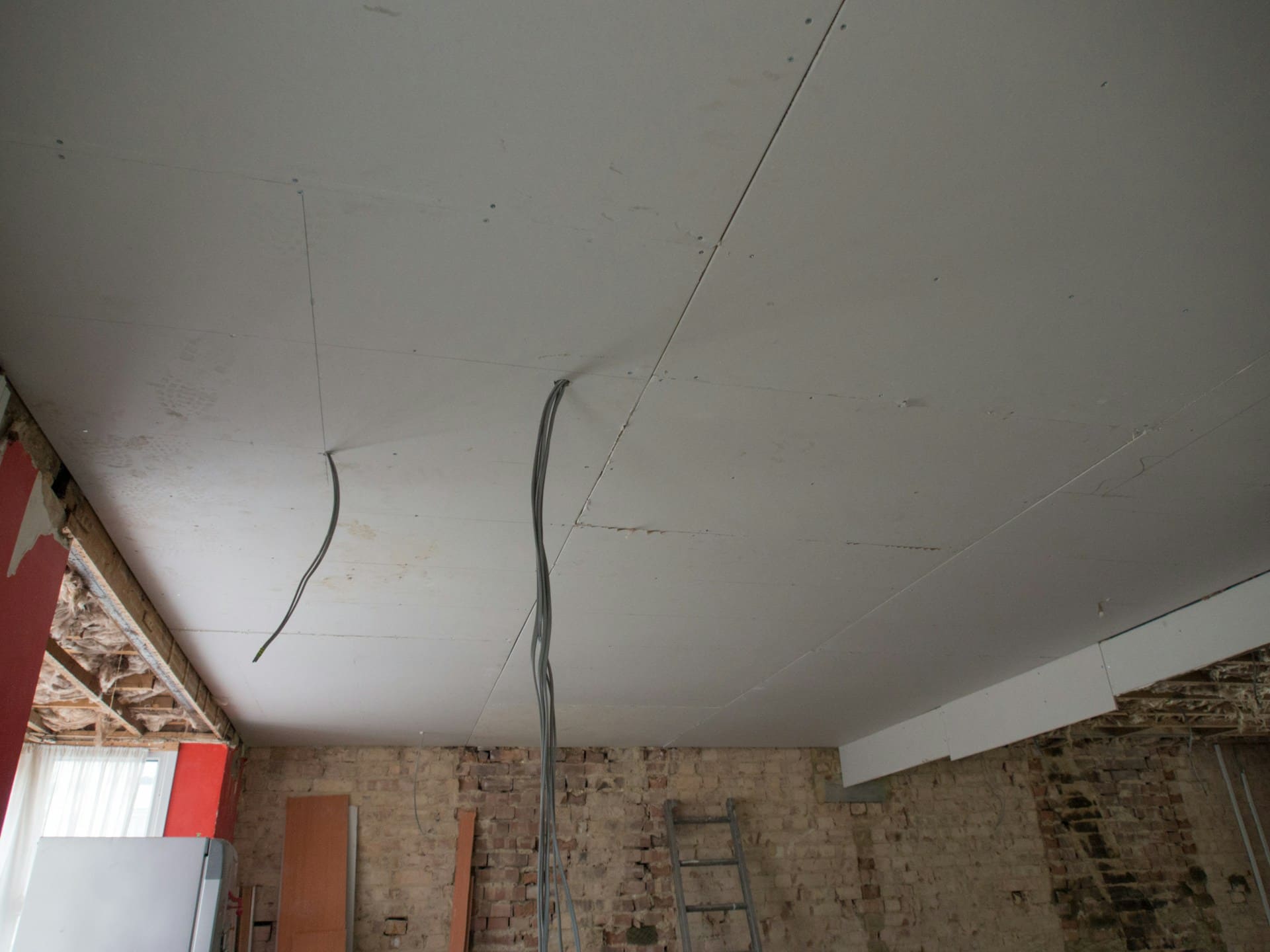
A straight line crack in your ceiling can feel alarming, especially if it appears suddenly or near a load-bearing wall. You want a clear read on whether the crack is a simple cosmetic issue or a sign of something that needs immediate attention.
A straight line ceiling crack most often means joint settlement, framing movement, or seam failure and is cosmetic in many cases, but it can also indicate structural movement when paired with other signs like sagging, widening, or dampness.
This article shows how to read the pattern, what causes straight line ceiling cracks, how urgent they are, and practical repair and prevention steps you can use right away.
What A Straight Line Ceiling Crack Typically Indicates
Common Types And Patterns Of Straight Line Cracks
Straight line cracks follow a clear path and often run along joints, seams, or where drywall meets plaster. You will see thin hairline lines, longer seam splits, or deeper cracks that track across a ceiling. Hairline lines that are uniform and do not change over time usually reflect normal drying or joint tape failure.
Straight cracks that run parallel to framing or along the drywall seam often point to installation or joint issues. If the crack is exactly where two drywall boards meet, expect tape or mud failure rather than foundation trouble. If the crack is centered between joists, the framing or support may have shifted.
When a straight crack steps or jogs at a corner or intersects fasteners, the pattern tells you about movement and stress points. Repeated straight cracks in the same location often mean a recurring movement source rather than a one-off shrinkage.
Identification is about pattern and location. You should map the crack path, note where it starts and ends, and check near seams, light fixtures, and load-bearing elements.
How Material And Location Affect Interpretation
Material matters. Gypsum drywall cracks differently than plaster over lath. Plaster often shows hairline cracking around plaster keys and can be brittle, while drywall tends to split along taped joints.
Location gives context. Cracks along interior non-load walls usually remain cosmetic. Cracks near chimneys, bearing walls, or across multiple rooms suggest broader movement that needs more attention.
Ceilings directly under attic spaces or roofing can reflect roof or attic moisture issues. Ceiling cracks near exterior walls may respond to seasonal temperature shifts and insulation differences.
Take photos and note environmental factors like recent storms, heavy rain, or renovations. That record helps if you consult a pro or track changes over time.
Primary Causes Of Straight Line Ceiling Cracks
Structural Movement And Settlement
Structural movement and house settlement cause straight cracks when framing shifts slightly. As foundations settle, load paths change and small separations appear at seams and joints.
Older homes settle gradually, and you may see straight cracks near doorways or at wall-ceiling intersections. Rapid new cracks after an event like heavy rain or excavation deserve faster review.
Minor settlement often stops after a season or two: ongoing widening or new nearby cracks signal a continuing issue. In that case, consult a structural engineer or qualified contractor.
Seasonal changes can make minor settlement more noticeable but do not always mean major structural failure. Track length and width monthly for signs of progression.
Thermal Expansion, Contraction, And Moisture Changes
Materials expand and contract with temperature and humidity shifts. Drywall and plaster shrink as they dry, causing straight hairline cracks along seams.
High humidity or water leaks cause plaster to swell and then crack as it dries. Look for discoloration or soft spots near the crack to spot moisture.
Attic ventilation and roof leaks are common moisture sources. Fixing moisture often halts new cracking and prevents mold.
Poor Installation, Joints, And Fastener Issues
Poor taping, thin joint compound, or missed fasteners let seams split along a straight line. Fasteners that back out leave gaps that become visible cracks.
Improperly spaced studs or joists can concentrate stress and lead to linear cracking. Oversanded joints or insufficient reinforcement produce cracks over time.
If the crack tracks directly over a screw or nail, the fastener likely worked loose or the material around it moved. That is a repairable cause but shows installation weakness.
DIY or poor contractor work often leaves diagnostic clues like uneven mud, missing tape, or repeated patch marks near the crack.
How To Assess Severity And Urgency
Visual Inspection Checklist (Width, Length, Repeatability)
Start with simple measures. Record crack width, length, and how many cracks you see. Use a ruler or put a small coin next to the crack when you photograph it.
Hairline cracks under 1/16 inch that do not change are usually cosmetic. Wider cracks, sudden openings, or cracks that grow indicate a more urgent problem.
Repeatability matters. If the same spot has been patched multiple times, expect a deeper movement source rather than surface failure. Note the direction of growth. Upward or downward shifts in the crack line can point to different stresses in the framing.
Associated Signs To Watch For (Sagging, Dampness, New Cracks)
Look for sagging ceilings, bowed drywall, or visible separation at wall-ceiling junctions. Those signs raise the concern level.
Dampness or staining near the crack suggests leaks rather than simple shrinkage. Test suspicious areas for moisture with a meter or by touch.
New cracks that appear suddenly after heavy weather, excavation, or tree removal are worth fast inspection. They can reflect altered loads or soil movement.
Also watch doors and windows that stick after a new crack appears. That combination often points to framing or foundation shifts.
When A Crack Suggests Structural Concern vs Cosmetic Issue
A crack suggests structural concern when it widens over weeks, occurs alongside sagging or multiple new cracks, or links to visible foundation movement. If you see those, call a structural engineer.
If the crack remains thin, stable, and limited to a single seam or joint, you can usually fix it cosmetically. Document the crack and monitor it monthly for changes. When in doubt, get a professional opinion. A short consult with a qualified inspector can save money and reduce risk.
Repair Options And Typical Costs
Quick Cosmetic Fixes For Hairline And Nonstructural Cracks
For hairline cracks you can often use lightweight spackle or joint compound, sand smooth, prime, and paint. That fix can cost $10 to $50 in materials if you do it yourself.
Use flexible paintable caulk for small cracks along moldings or trim. Caulk resists small movements better than brittle compound.
If you prefer a pro for a single small crack, expect a minimum service fee, often $100 to $300 depending on travel and patch size.
When To Use Reinforcement, Tape, Or Joint Compound
Tape and proper joint compound are the right approach for seam failure. Remove loose material, apply paper or fiberglass tape, then two coats of mud with sanding in between.
Fiberglass mesh tape resists recurring cracks better than paper in some cases. Reinforcing with backer rod and flexible filler suits gaps wider than 1/8 inch.
A typical DIY taped seam repair uses $20 to $60 of materials and a few hours of labor. A contractor patch for a larger area may cost a few hundred dollars.
Professional Repairs For Structural Or Recurring Cracks
If movement continues or the crack returns, a pro may need to open the ceiling and check framing, insulation, and fasteners. They may add blocking, sister joists, or re-anchor framing.
Major structural repairs, foundation work, or roof fixes can range from $1,000 to $10,000 or more depending on scope. Get at least two quotes and a written plan.
For guidance on foundation and structural work, consult reputable resources such as FEMA on home repair and safety and the International Code Council for standards. https://www.fema.gov https://www.iccsafe.org
This Old House offers practical repair steps for drywall and plaster that you might use for small jobs. https://www.thisoldhouse.com
Prevention, Monitoring, And Maintenance Tips
Seasonal Monitoring And Simple Home Checks
Check your ceiling cracks at least twice a year and after big weather events. Take photos and measure any change in width.
Keep attic ventilation working and insulation adequate to reduce temperature swings that cause movement. Ensure attic vents are clear and insulation is evenly distributed.
Inspect roof flashing, chimneys, and gutters. Water that reaches the ceiling from above often triggers cracks and staining. Simple home checks and early fixes reduce the chance of recurring problems and save money over time.
Addressing Underlying Causes (Moisture Control, Foundation Care)
Control moisture around your foundation by keeping gutters clean and grading soil away from the house. Persistent dampness can drive settlement and cracks.
Fix interior leaks, seal roof penetrations, and repair flashing promptly. Dry building materials stop shrinking and swelling, reducing new cracks.
If you notice foundation movement, hire a licensed foundation contractor or structural engineer. Early intervention prevents worse damage.
When To Monitor Versus When To Act Immediately
Monitor when cracks are thin, stable, and limited to a seam, and there are no other symptoms. Use photos and measurements to confirm stability.
Act immediately if cracks widen quickly, are accompanied by sagging or new nearby cracks, or show moisture and staining. Call a professional for assessment.
If you are unsure, a short inspection by a licensed contractor or structural engineer is worth the peace of mind and can prevent larger repairs later.
Table of Common Signs and Advice
| Sign | Likely Cause | What You Should Do |
|---|---|---|
| Hairline seam crack | Drying or tape failure | Monitor and patch if stable |
| Wide or growing crack | Structural movement | Get engineer consult |
| Crack with stain | Water leak | Find and fix leak, repair plaster |
| Recurring crack | Ongoing movement | Reinforce framing or foundation work |
Bullet list of quick checks
- Photograph cracks and date images
- Measure width and length monthly
- Check attic and roof for leaks
- Inspect exterior grade and gutters
Conclusion
A straight line ceiling crack often signals joint or material movement and is cosmetic in many cases, but it can point to structural issues when paired with widening, sagging, or moisture. You should document the crack, run the inspection checklist, and choose repair methods that match the cause.
For small, stable cracks you can patch and monitor. For widening, damp, or recurring cracks get a professional inspection and consider reinforcement or structural repair. Quick action on leaks and simple maintenance steps will stop many cracks from coming back.
If you need help deciding, start with photos, measurements, and one professional opinion. That will give you a clear plan and avoid unnecessary expense.
Frequently Asked Questions
What does a ceiling crack straight line meaning usually indicate?
A straight line ceiling crack most often indicates joint settlement, framing movement, or seam failure. It’s frequently cosmetic when hairline and stable, but can signal structural movement if paired with widening, sagging, moisture, or multiple new cracks—monitor and document changes monthly.
How can I tell if a straight line ceiling crack is urgent?
Measure and photograph the crack, note width and length, and watch for growth. Urgent signs include rapid widening, sagging, damp stains, new nearby cracks, or doors/windows sticking. If any appear, contact a structural engineer or qualified contractor promptly.
What are practical repair options for a straight line ceiling crack?
For hairline or nonstructural cracks, use lightweight spackle, sand, prime, and paint or flexible caulk for trim joints. For seam failure, apply tape and joint compound. Recurring or structural cracks may require framing fixes, re-anchoring, or foundation/roof repairs by a pro.
Can a straight ceiling crack indicate foundation problems?
Yes — straight cracks that widen over time, appear with multiple new cracks, sagging, or exterior foundation movement can reflect settlement or foundation issues. If you suspect foundation involvement, get a structural engineer or licensed foundation contractor to evaluate and recommend repairs.
How can I prevent straight line ceiling cracks from recurring?
Prevent recurrence by controlling moisture (fix leaks, keep gutters clear, grade soil away from foundation), improving attic ventilation and insulation, and ensuring proper framing and fastener installation. Regular seasonal inspections and photo records help catch movement early and guide timely fixes.
Read More: