
You’re awakened at 3 a.m. by the unmistakable sound of your toilet refilling, again. It happens every few minutes, cycling on for five to ten seconds before shutting off. Your utility bill keeps climbing, and you’ve done nothing differently. This phantom flush is more than annoying, it’s draining your wallet.
A toilet making noise every few minutes is almost always caused by a faulty flapper valve that allows water to slowly leak from the tank into the bowl, triggering the fill valve to periodically refill the tank. Other common culprits include worn flush valve seals, incorrect water level settings, misaligned refill tubes, or fluctuating water pressure that disrupts the tank’s equilibrium.
The good news? Most of these fixes are straightforward DIY repairs requiring only basic tools and about $10–$20 in replacement parts. This guide walks you through the diagnostic tests and repair steps to stop phantom flushing immediately.

Key Takeaways
- A toilet making noise every few minutes is usually caused by a faulty flapper valve that allows water to leak into the bowl, triggering the fill valve to refill periodically.
- The food dye test—adding 10 drops of food coloring to the tank and checking if color appears in the bowl after 15–20 minutes—reliably diagnoses a leaking flapper.
- Most phantom flush repairs are straightforward DIY fixes costing $10–$20, including flapper replacement, fill valve adjustment, and refill tube repositioning.
- Replace your flapper every 3–5 years proactively, since rubber degrades invisibly and a single leaking toilet can waste 200 gallons per day according to the EPA.
- Call a professional plumber if phantom flushing persists after replacing the flapper and adjusting the fill valve, as this may indicate a cracked tank, bowl, or hidden leak.
Understanding the “Phantom Flush” Phenomenon
Phantom flushing, sometimes called ghost flushing, describes a toilet that runs or hisses intermittently without anyone touching the handle. The tank fills, shuts off, then mysteriously refills every few minutes or hours. This cycling happens because water is escaping from the tank into the bowl, dropping the water level just enough to trigger the float-activated fill valve.
Most homeowners don’t realize this is happening during the day. Background noise masks the brief refill cycles. But at night, that sudden hiss jolts you awake. You’ll also notice higher water bills, a single leaking toilet can waste 200 gallons per day, according to the EPA’s WaterSense program.
Why Your Toilet Runs or Hisses Intermittently
Your toilet tank maintains a precise water level. When you flush, the flapper lifts, releasing water into the bowl. The flapper then settles back onto the flush valve seat, creating a watertight seal. The fill valve refills the tank until the float tells it to stop.
Phantom flushing occurs when that seal fails. Water trickles past the flapper so slowly you can’t hear it, but over 15–30 minutes, the tank loses enough water to drop below the fill line. The fill valve kicks on, tops off the tank, and shuts off. Then the cycle repeats.
Other causes include cracked overflow tubes, kinked refill tubes that siphon water, or pressure spikes that momentarily lift the flapper. But 90% of phantom flushes trace back to a deteriorating flapper. Chlorine, minerals, and age make rubber flappers warp, stiffen, or develop tiny cracks invisible to the naked eye.
The Most Common Cause: A Faulty Flapper Valve
The flapper is a $5 rubber disk that sits at the bottom of your tank. It’s the single most failure-prone component in any toilet. Replacement flappers last three to five years depending on water chemistry. Hard water accelerates degradation, and chlorinated municipal supplies make rubber brittle.
How to Diagnose a Leaking Flapper
Perform the food dye test to confirm a silent leak. Add 10 drops of food coloring or a dye tablet into the tank (not the bowl). Wait 15–20 minutes without flushing. Check the bowl. If colored water appears, your flapper is leaking.
Inspect the flapper itself. Remove the tank lid and flush. Watch the flapper drop. Does it seat evenly? Run your finger around the flush valve seat, the white or brass ring the flapper sits on. Mineral buildup, corrosion, or rough edges prevent a tight seal. Even a grain-of-sand-sized gap lets water through.
Check the chain connecting the flapper to the flush handle. If it’s too short or tangled, it holds the flapper slightly open. If it’s too long, it snags under the flapper, preventing closure. You want about half an inch of slack when the flapper is fully seated.
Replacing Your Toilet Flapper: Step-by-Step Instructions
Shut off the water supply valve behind the toilet. Flush to drain the tank. Unhook the old flapper from the pegs on the overflow tube and disconnect the chain from the flush lever arm.
Bring the old flapper to a hardware store. Flappers come in 2-inch and 3-inch sizes and various styles (rubber, silicone, or adjustable). Matching the original design ensures compatibility. The Korky 2021BP Universal Flapper fits most standard Kohler, American Standard, and TOTO toilets.
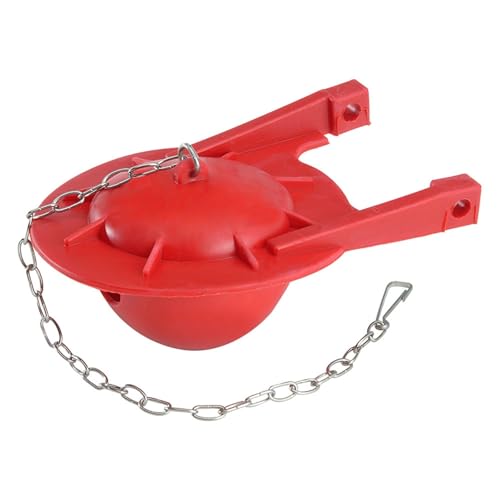
Before installing the new flapper, scrub the flush valve seat with an abrasive pad or fine-grit sandpaper to remove mineral deposits and corrosion. Wipe it dry. Attach the new flapper to the overflow tube pegs, connect the chain with half an inch of slack, turn the water back on, and test. The phantom cycling should stop immediately.
Fill Valve Problems and Adjustments
If replacing the flapper doesn’t solve the problem, your fill valve may be stuck open or set too high, causing water to overflow into the overflow tube. This creates a continuous loop: water flows in, overflows, the tank level drops, and the fill valve refills again.
How to Adjust Your Fill Valve Water Level
Modern fill valves (Fluidmaster, Korky) have an adjustment screw or clip on the float cup. Turn the screw counterclockwise to lower the water level, or pinch the clip and slide the float down. The water line should sit about one inch below the top of the overflow tube.
Flush and watch the refill cycle. The fill valve should shut off cleanly once the water reaches the target line. If it continues to dribble or hiss, the valve’s internal diaphragm seal may be worn. A stuck or mineral-clogged diaphragm lets water seep past, triggering periodic refills.
Replace the entire fill valve assembly if adjustments don’t work. The Fluidmaster 400A Universal Fill Valve installs in under 10 minutes with an adjustable wrench. Turn off the water, flush, disconnect the supply line, unscrew the locknut under the tank, pull out the old valve, and drop in the new one. Adjust the height so the valve sits above the water line, and reconnect.

Refill Tube and Overflow Pipe Issues
The refill tube is a small plastic hose that runs from the fill valve to the overflow tube. Its job is to refill the bowl after a flush. If it’s kinked, disconnected, or inserted too far down the overflow tube, it can siphon water out of the tank or create phantom cycling.
Pull the refill tube out and inspect it. The tube should clip to the outside of the overflow pipe, not be jammed down inside it. When inserted too deeply, it can create a siphon that pulls water from the tank into the bowl. Trim the tube if necessary and secure it with the provided clip, ensuring it directs water into, but doesn’t enter, the overflow tube.
Check the overflow tube itself for cracks. A crack below the waterline allows tank water to leak directly into the bowl. You’ll need to replace the entire flush valve assembly if the overflow tube is damaged, as it’s typically molded as one unit.
Water Pressure Fluctuations Causing Noise
Municipal water pressure can fluctuate throughout the day as neighbors use water, pumps cycle, or supply lines expand and contract with temperature. Sudden pressure spikes can momentarily lift the flapper or cause fill valves to chatter and hiss.
Install a water pressure regulator on your main supply line if you experience frequent pressure surges. Most residential systems should operate between 40–60 PSI. High pressure (above 80 PSI) stresses toilet components and causes premature wear.
Pressure fluctuations are more common in homes with older galvanized or corroded pipes. If you hear banging (water hammer) when you flush, install water hammer arrestors on the supply lines. These small shock absorbers cushion pressure waves and eliminate noise.
Worn or Damaged Flush Valve Seal
The flush valve seal is the gasket that sits between the tank and the bowl, directly under the flush valve. If this seal deteriorates, water seeps from the tank into the bowl at the connection point, triggering phantom refills. You’ll often see water pooled around the base of the toilet or slight drips between the tank and bowl.
Replacing the flush valve seal requires removing the tank. Turn off the water, flush, and sponge out remaining water. Disconnect the supply line and unbolt the tank from the bowl (two or three bolts accessed from underneath). Lift the tank off carefully.
Remove the old rubber gasket from the flush valve threads. Clean the mating surfaces on both the tank and bowl. Install a new spud washer or gasket (sized to match your flush valve, typically 2-inch or 3-inch), and reassemble the tank. Tighten the bolts evenly in an alternating pattern to avoid cracking the porcelain. If the entire flush valve assembly is old or corroded, replace it with a universal kit that includes a new overflow tube, flapper, and gasket.
When to Call a Professional Plumber
Most phantom flush repairs are DIY-friendly, but some situations call for professional help. If you’ve replaced the flapper, adjusted the fill valve, and checked all seals yet the noise persists, you may have a cracked tank or bowl. Hairline cracks are hard to spot but allow slow, persistent leaks.
Call a plumber if you notice water pooling around the toilet base, hear constant running that doesn’t stop even after component replacement, or if the toilet rocks or shifts when you sit on it. Loose mounting bolts can stress the wax ring and tank-to-bowl seal, creating leaks that mimic phantom flushing.
A licensed plumber can perform a pressure test to identify hidden leaks, inspect internal tank components with specialized tools, and assess whether your toilet should be replaced entirely. Toilets manufactured before 1994 use 3.5–7 gallons per flush: upgrading to a modern WaterSense-certified model (1.28 gallons per flush) can pay for itself in water savings within two years.
Preventing Future Toilet Noise Problems
Prevent phantom flushing by replacing your flapper every three to five years, even if it looks fine. Rubber degrades invisibly, and proactive replacement costs far less than the water wasted by a slow leak. Mark your calendar or set a reminder.
Clean your tank annually. Shut off the water, flush, and scrub away mineral deposits on the flush valve seat, fill valve, and flapper contact points. Use white vinegar or a non-abrasive cleaner, avoid bleach tablets that accelerate rubber deterioration.
Install a water softener if you have hard water. Calcium and lime buildup corrode seals and clog fill valve diaphragms. Softer water extends the life of all toilet components. Monitor your water bill for unexplained spikes: even a small increase can signal a hidden leak. According to the Alliance for Water Efficiency, toilets account for nearly 30% of residential indoor water use, making leak detection critical for conservation and cost control.
Frequently Asked Questions About
What causes a toilet to make noise every few minutes?
A toilet making noise every few minutes is usually caused by a faulty flapper valve allowing water to slowly leak from the tank into the bowl, triggering the fill valve to refill periodically. Other causes include worn flush valve seals, incorrect water level settings, misaligned refill tubes, or water pressure fluctuations.
How can I tell if my toilet has a leaking flapper?
Perform the food dye test: add 10 drops of food coloring to the tank and wait 15-20 minutes without flushing. If colored water appears in the bowl, your flapper is leaking. You can also inspect the flapper for mineral buildup or check if the connecting chain is too short or tangled.
How much water can a leaking toilet waste per day?
According to the EPA’s WaterSense program, a single leaking toilet can waste up to 200 gallons of water per day. This phantom flushing significantly increases your utility bills and contributes to unnecessary water waste.
What’s the easiest way to fix a toilet making noise?
Replacing the flapper valve is the simplest fix for most phantom flush issues. It’s a $5-$20 DIY repair requiring only basic tools. Shut off the water, remove the old flapper, clean the flush valve seat, install a new flapper with proper chain slack, and test. This solves the problem in most cases.
How long do toilet flapper valves typically last?
Most replacement flappers last three to five years, depending on water chemistry. Hard water and chlorinated municipal supplies accelerate rubber degradation, making them warp, stiffen, or develop cracks. Proactive replacement every 3-5 years prevents costly water waste.
When should I call a professional plumber for toilet noise?
Call a plumber if you’ve replaced the flapper and adjusted the fill valve but noise persists, water pools around the toilet base, the toilet rocks when you sit, or constant running continues after repairs. These signs indicate hidden leaks, cracked tanks, or loose mounting bolts requiring professional diagnosis.
Read More:
- Toilet Makes Hissing Noise After Flushing (Causes and Quick Fixes)
- Toilet Makes Hissing Noise Randomly (Here’s Why and How to Fix It)
- Toilet Makes Noise When Flushing (Here’s the Expert Solutions)
- Pipes Making Loud Noise After Flushing Toilet (Causes and Quick Fixes)
- Toilet Makes Whistling Sound (Here’s Why and How to Fix It)